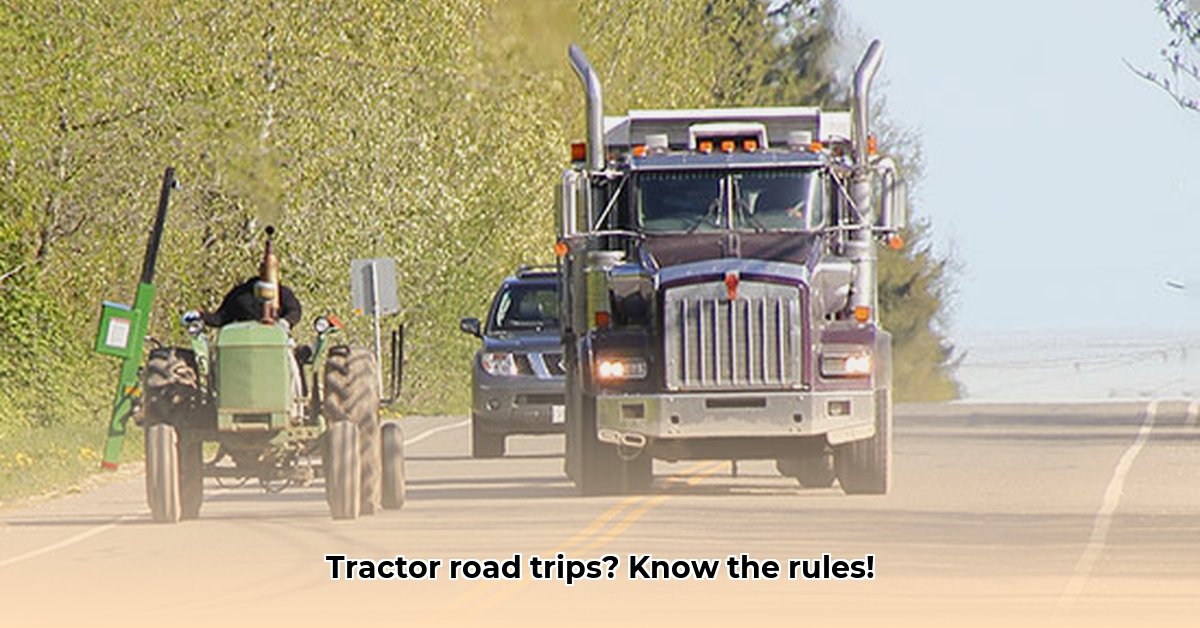
Driving a tractor on public roads presents unique challenges due to varying state regulations. This guide provides a state-by-state overview, risk assessment strategies, and best practices to ensure safe and legal operation. Understanding these regulations is crucial for farmers to avoid accidents and penalties.
State-Specific Regulations: A Patchwork of Laws
Tractor road laws vary significantly across states. This section offers a general overview; always consult your state's Department of Transportation (DOT) website for the most up-to-date and accurate information. This is not an exhaustive guide and does not constitute legal advice.
Speed Limits
Most states limit tractor speeds to 25 mph or less. However, some may allow higher speeds for newer, registered tractors meeting specific criteria. Always check your state's regulations. Do you know your state's speed limit for tractors?
Lighting Requirements
Adequate lighting is essential for visibility. Headlights (white, front), taillights (red, rear), and brake lights are typically mandatory. Many states also require an illuminated license plate. What are your state’s specific requirements for tractor lighting?
Slow-Moving Vehicle (SMV) Emblem
The bright orange triangle SMV emblem signifies a slow-moving vehicle. Almost all states mandate its use, but size and placement requirements might vary. Is your SMV emblem compliant with your state's regulations?
Registration Requirements
Registration requirements often depend on tractor weight or horsepower. Heavier or more powerful tractors may need registration, while smaller ones may not. Weight and size restrictions can limit permissible routes. What are your state’s registration requirements for tractors?
Nighttime Driving Restrictions
Nighttime driving is inherently riskier. Some states restrict or prohibit nighttime tractor operation, especially on major highways. Always prioritize daytime travel whenever possible. Does your state have any restrictions on nighttime tractor operation?
Other Relevant Regulations
Regulations may cover permitted routes, oversized load permits, and other specific requirements. Thorough research is crucial before operating a tractor on public roads. Have you checked your state's regulations for any unusual conditions that may apply to your tractor?
Risk Assessment and Mitigation
Driving a tractor on public roads involves inherent risks. The following table outlines common risks and corresponding mitigation strategies:
| Risk Factor | Mitigation Strategies |
|---|---|
| Night Driving | Prioritize daytime travel. Use extra reflective tape and powerful lights if night driving is unavoidable. |
| High-Traffic Areas | Plan routes to avoid rush hour and busy highways. Use less-traveled roads whenever possible. |
| Inadequate Braking | Ensure regular brake maintenance. Consider upgrading to a more powerful braking system if needed. |
| Poor Visibility | Ensure your SMV emblem is clean, undamaged, and visible. Use additional reflective tape. |
| Inconsistent State Regulations | Thoroughly research each state's DOT regulations before traveling across state lines. |
| Unsecured Loads | Secure cargo carefully to prevent shifting or spillage. Use appropriate tie-downs. |
Best Practices for Safe Tractor Operation on Public Roads
Beyond legal compliance, these best practices enhance safety:
Pre-Trip Inspection: Before each trip, thoroughly inspect your tractor's lights, brakes, tires, and fluid levels.
Defensive Driving: Assume other drivers may not see you. Maintain a safe following distance and be extra vigilant.
Route Planning: Plan your route to minimize travel on high-traffic roads. Use low-traffic roads as much as possible.
Safe Loading and Securing of Cargo: Securely fasten any cargo to prevent shifting or falling.
Resources and Further Information
For specific state regulations, consult your state's Department of Transportation (DOT) website. Agricultural organizations and government agencies also offer valuable resources. Ongoing updates remain crucial.
Conclusion: Advocating for Safer Roads
Safe and legal tractor operation requires understanding state-specific regulations, proactively addressing risks, and adhering to best practices. While individual state regulations create complexities, farmers can advocate for consistent national standards to improve safety and simplify compliance. Remember, safe operation protects not only the driver but also other road users.